A clock tells you the time. A map tells you where to act. Aging clocks opened the era of reading biological time; the next step is navigation — which aging hallmark, which organ-aging pattern, which follow-up. steeramed.com/en/
I’m rarely on LinkedIn — email: jianghui@deepome.com
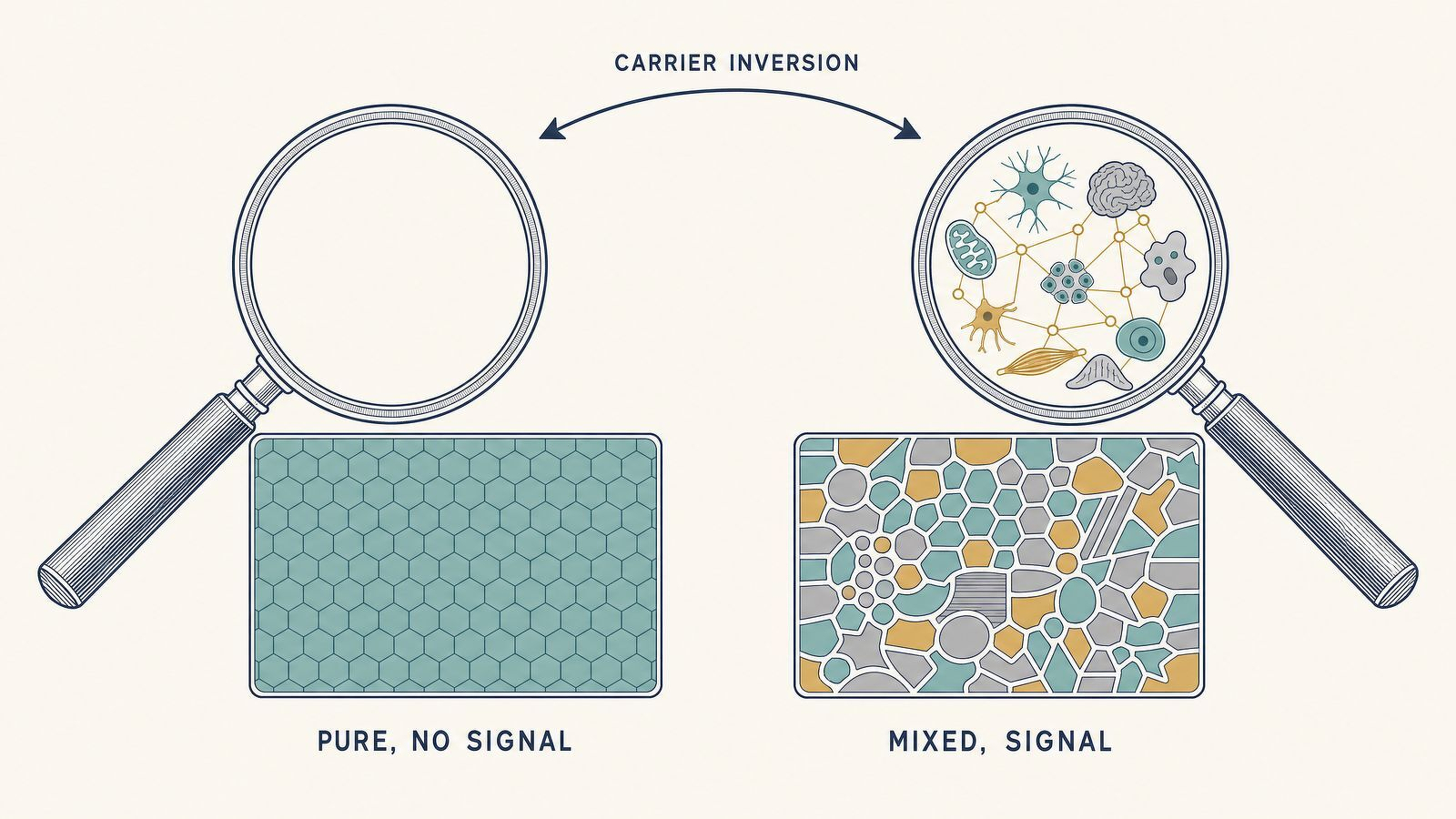
A reversal: the most organ-specific gene sets stayed quiet; mixed, disease-anchored ones carried the signal — the only stable construction. RootMap logged the surprise, not the plan. doi.org/10.20944/preprints202609.2376.v1
I’m rarely on LinkedIn — email: jianghui@deepome.com
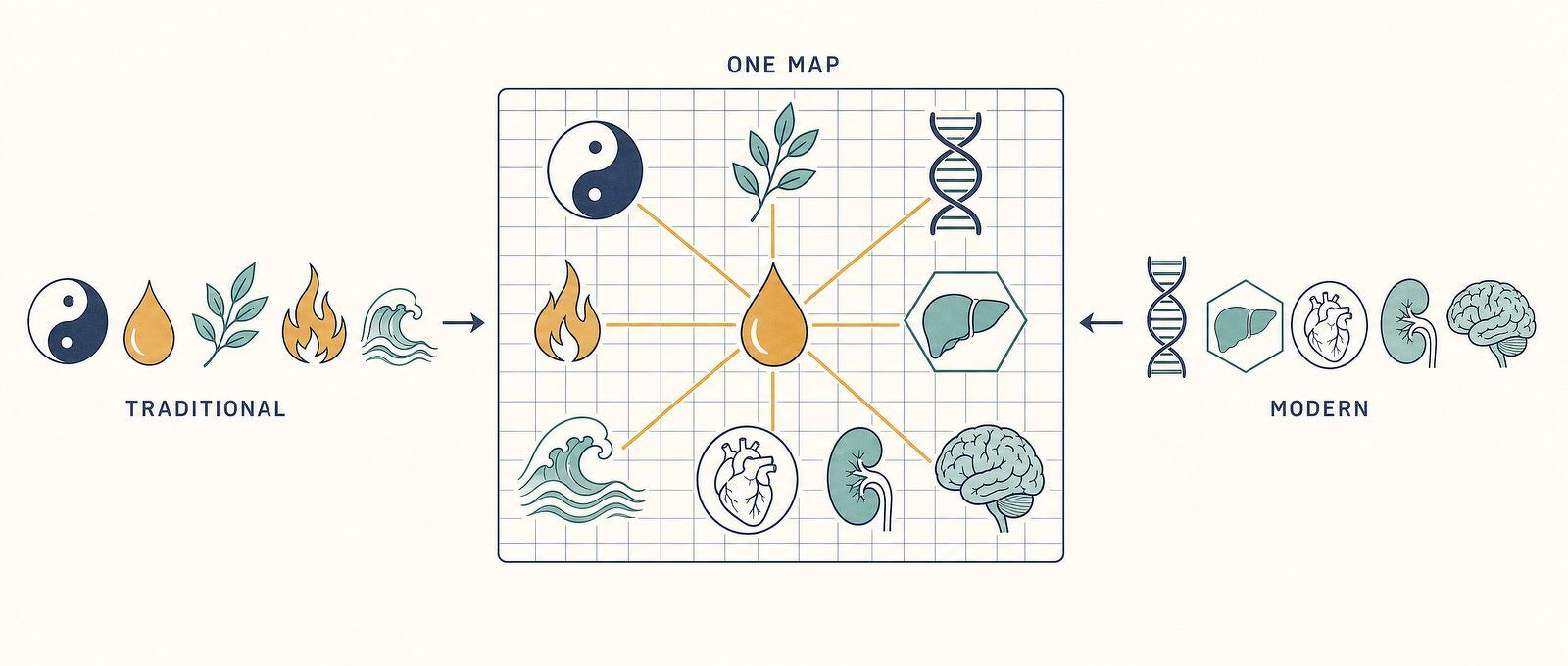
Two systems, one map. TCM concepts entered the hallmarks map as testable modules — no renaming, no doctrine. Essence (jing) proved the largest hub: 5 of 10 fundamental-substance pairs. doi.org/10.20944/preprints202609.2376.v1
I’m rarely on LinkedIn — email: jianghui@deepome.com
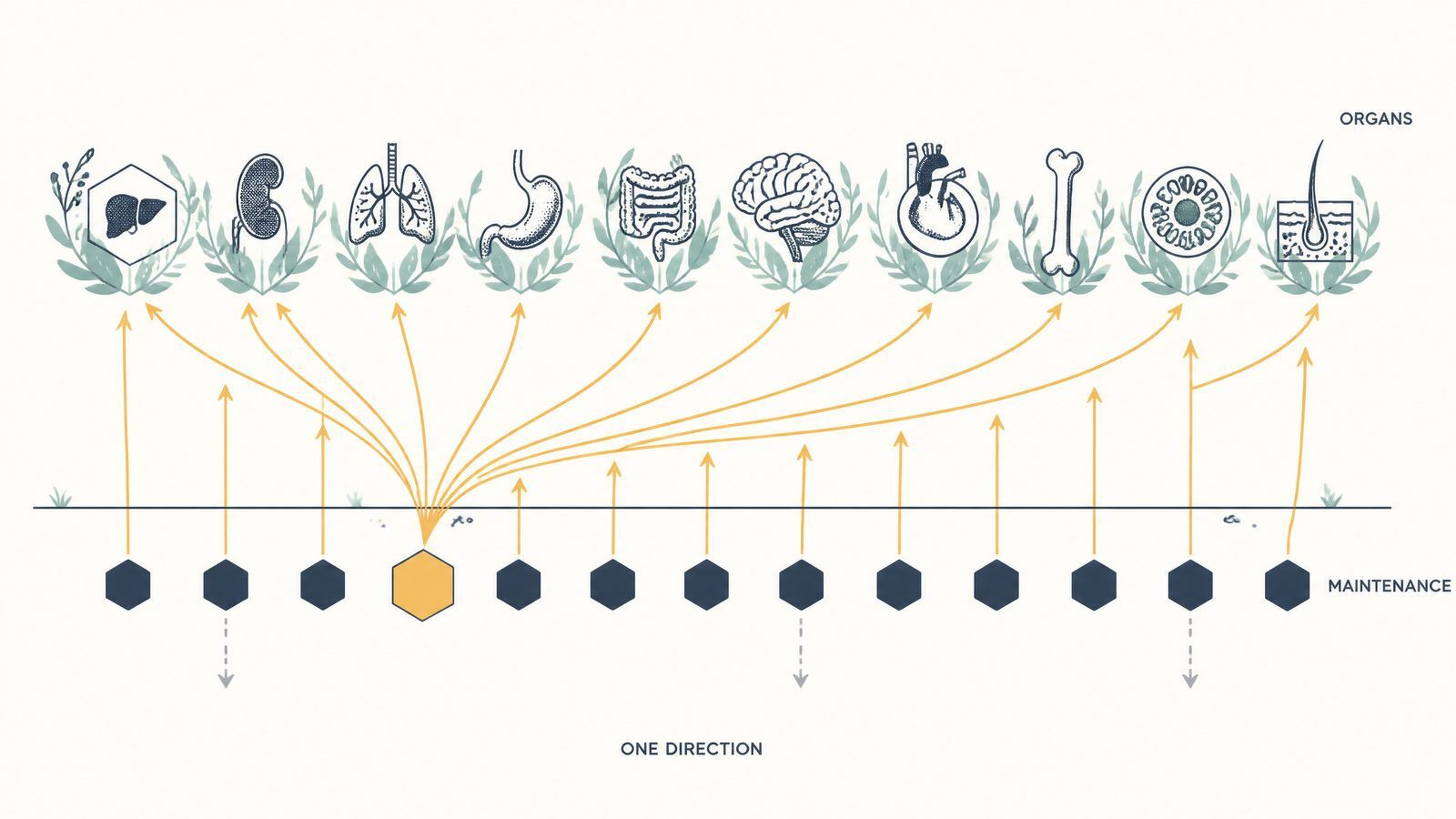
The arrows ran mostly one way: aging hallmarks marked organ-aging patterns more often than the reverse. Widest fan: stem-cell upkeep — twelve organ modules. Structure points upstream. doi.org/10.20944/preprints202609.2376.v1
I’m rarely on LinkedIn — email: jianghui@deepome.com
Cell defines world models: state, action, transition. Our dependency map (RootMap): layer labels compacted a PPI-ranked list 2.8x, yet indistinguishable from matched draws (p=0.18) — a null we publish. doi.org/10.20944/preprints202609.2376.v1
I’m rarely on LinkedIn — email: jianghui@deepome.com
PPI shows connections, not direction. Our dependency map (RootMap): bone marrow: r=−0.24 with age in the high stem-cell-maintenance group, +0.01 in the low group — one edge in plain numbers. doi.org/10.20944/preprints202609.2376.v1
I’m rarely on LinkedIn — email: jianghui@deepome.com
We do not just map what is wrong. We map what can be moved — and how to verify it. RootMap reads maintenance states from blood and tests which ones shape organ aging. doi.org/10.20944/preprints202609.2376.v1
I’m rarely on LinkedIn — email: jianghui@deepome.com
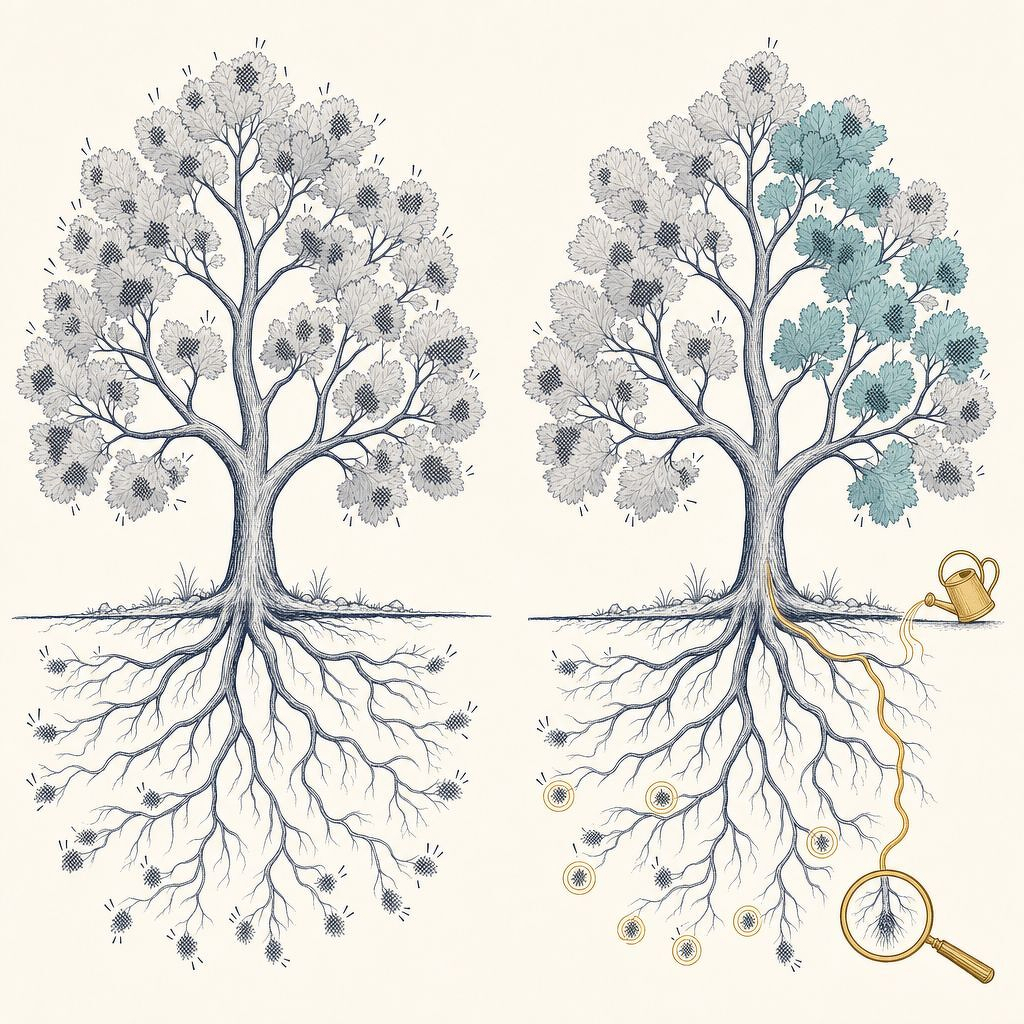
RootMap prescribes nothing yet — it tells a longevity clinic what to measure, and what to follow up. The module page is live: steeramed.com/en/rootmap/
I’m rarely on LinkedIn — email: jianghui@deepome.com
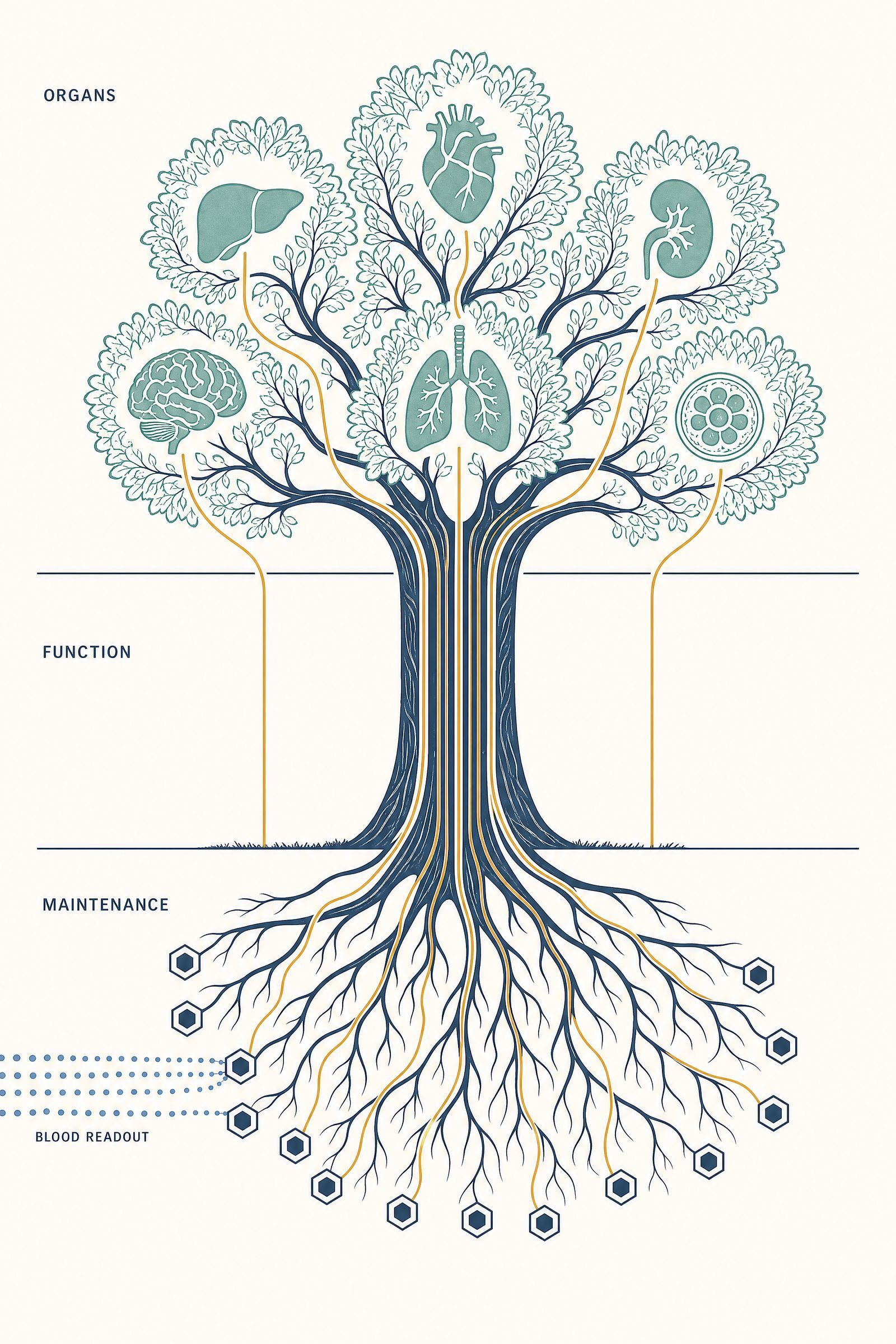
We do not just map what is wrong. We map what can be moved — and how to verify it. RootMap reads maintenance states from blood and tests which ones shape organ aging. doi.org/10.20944/preprints202609.2376.v1
I’m rarely on LinkedIn — email: jianghui@deepome.com
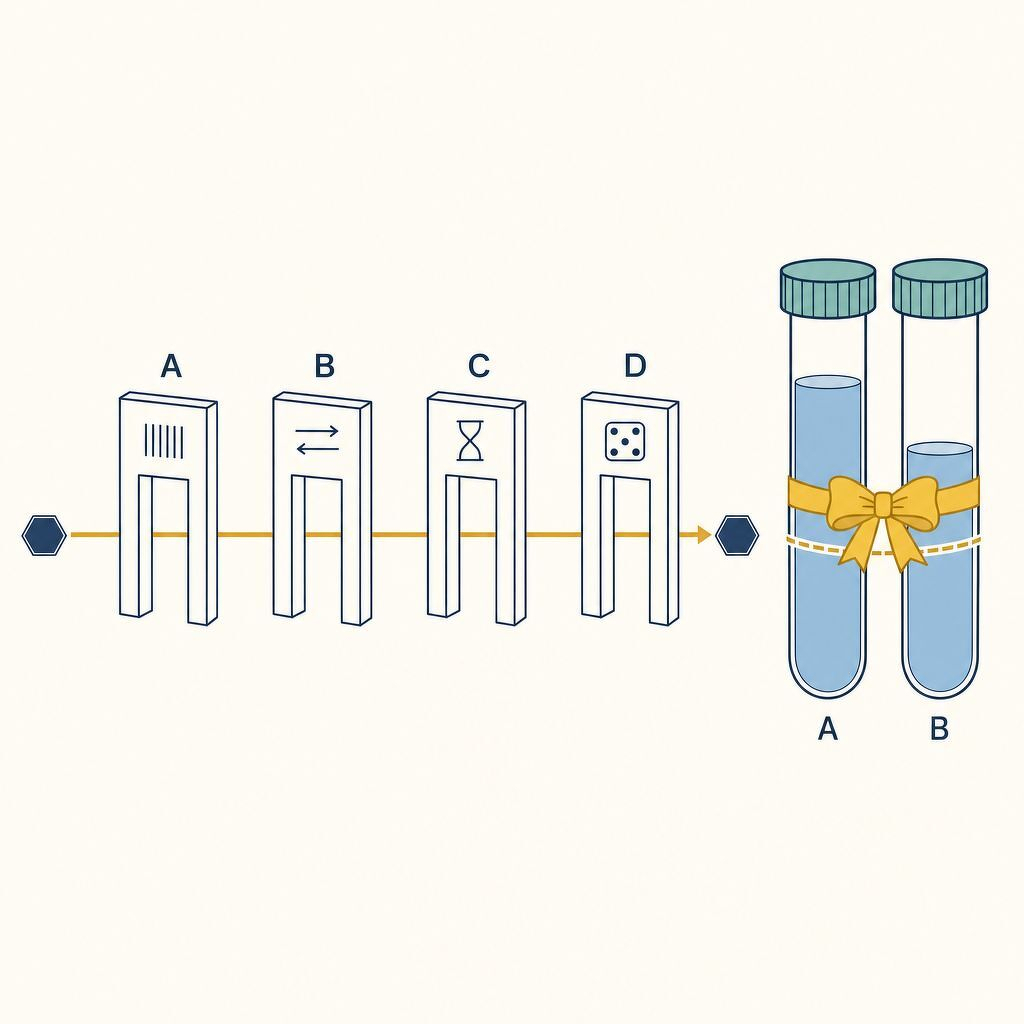
Every arrow on our map earned its place: four artifact checks first, then a second cohort to keep it honest. Most candidates died on the way. What survived, we drew. Skepticism is the ink. doi.org/10.20944/preprints202609.2376.v1
I’m rarely on LinkedIn — email: jianghui@deepome.com
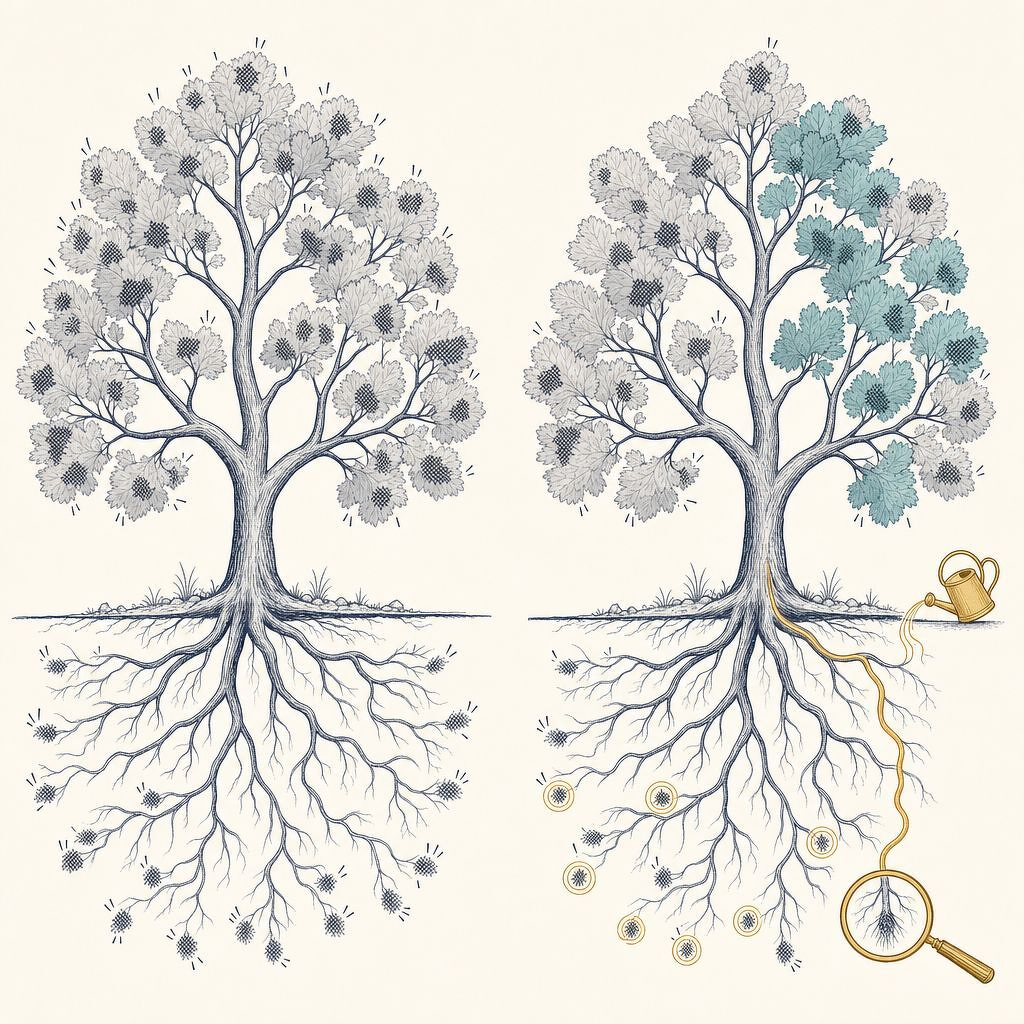
Two people, same age. One’s marrow stays capable; the other’s slides. The difference tracked stem-cell upkeep. You don’t age with the calendar — you age with your mechanisms. doi.org/10.20944/preprints202609.2376.v1
I’m rarely on LinkedIn — email: jianghui@deepome.com
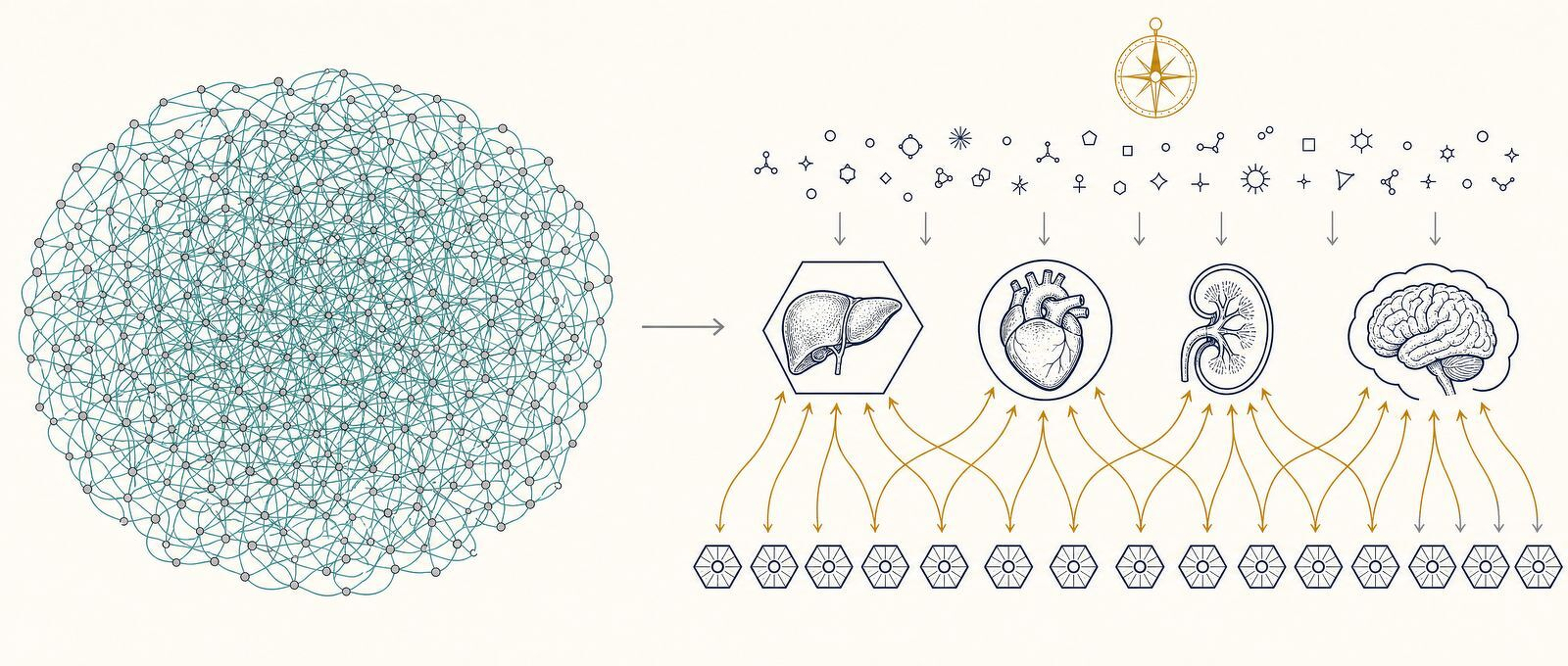
In Chinese medicine, ‘liver’ is a pattern, not an organ. Beside modern modules it sat nearest lymph and immune — not the liver itself. Two systems, one ruler — both now discussable. doi.org/10.20944/preprints202609.2376.v1
I’m rarely on LinkedIn — email: jianghui@deepome.com
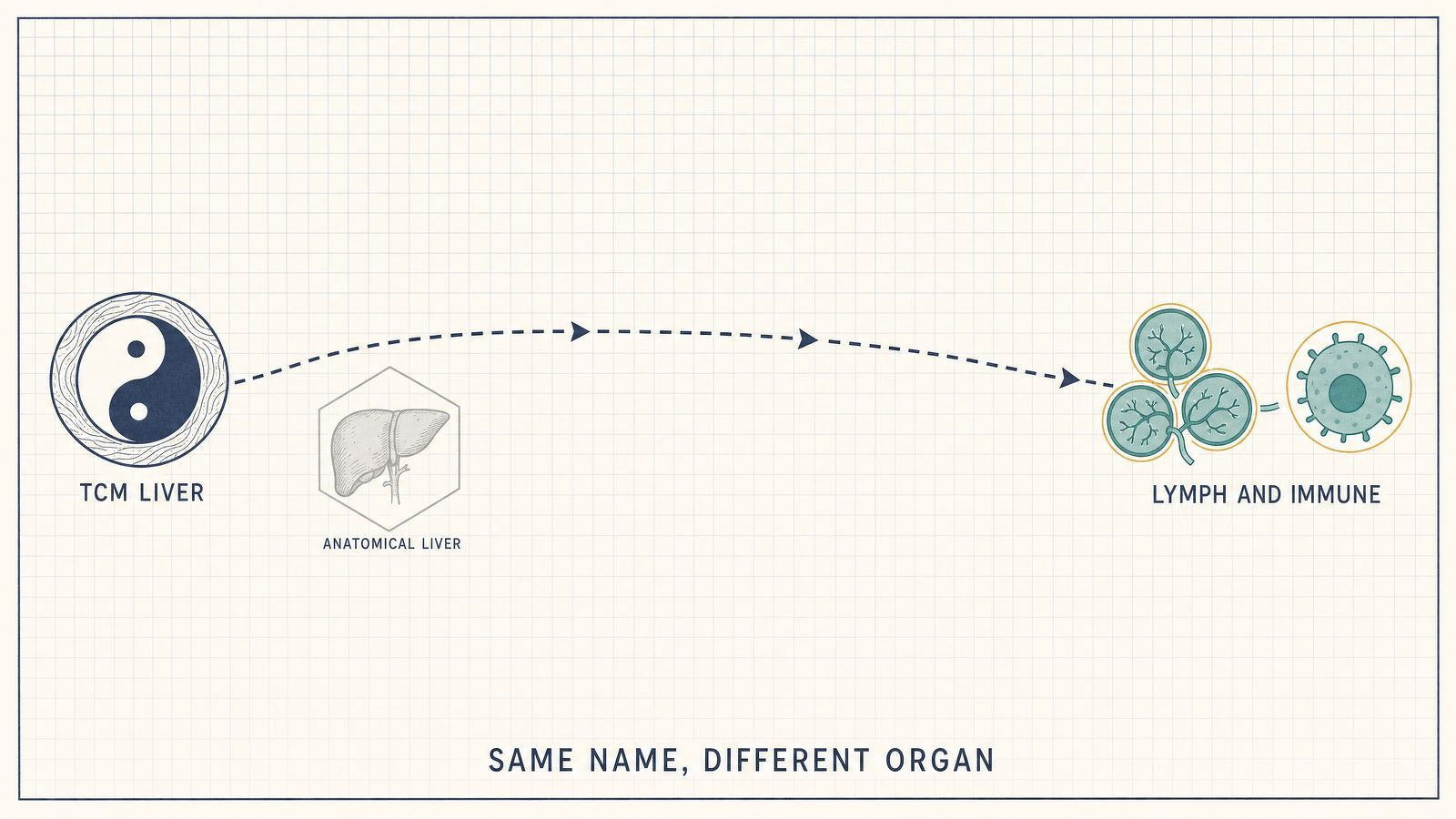
Aging hallmarks: a list of 14, not a map. A list names suspects; a map says who shapes whom. From blood, we drew the map — which maintenance states mark how each organ ages. doi.org/10.20944/preprints202609.2376.v1
I’m rarely on LinkedIn — email: jianghui@deepome.com
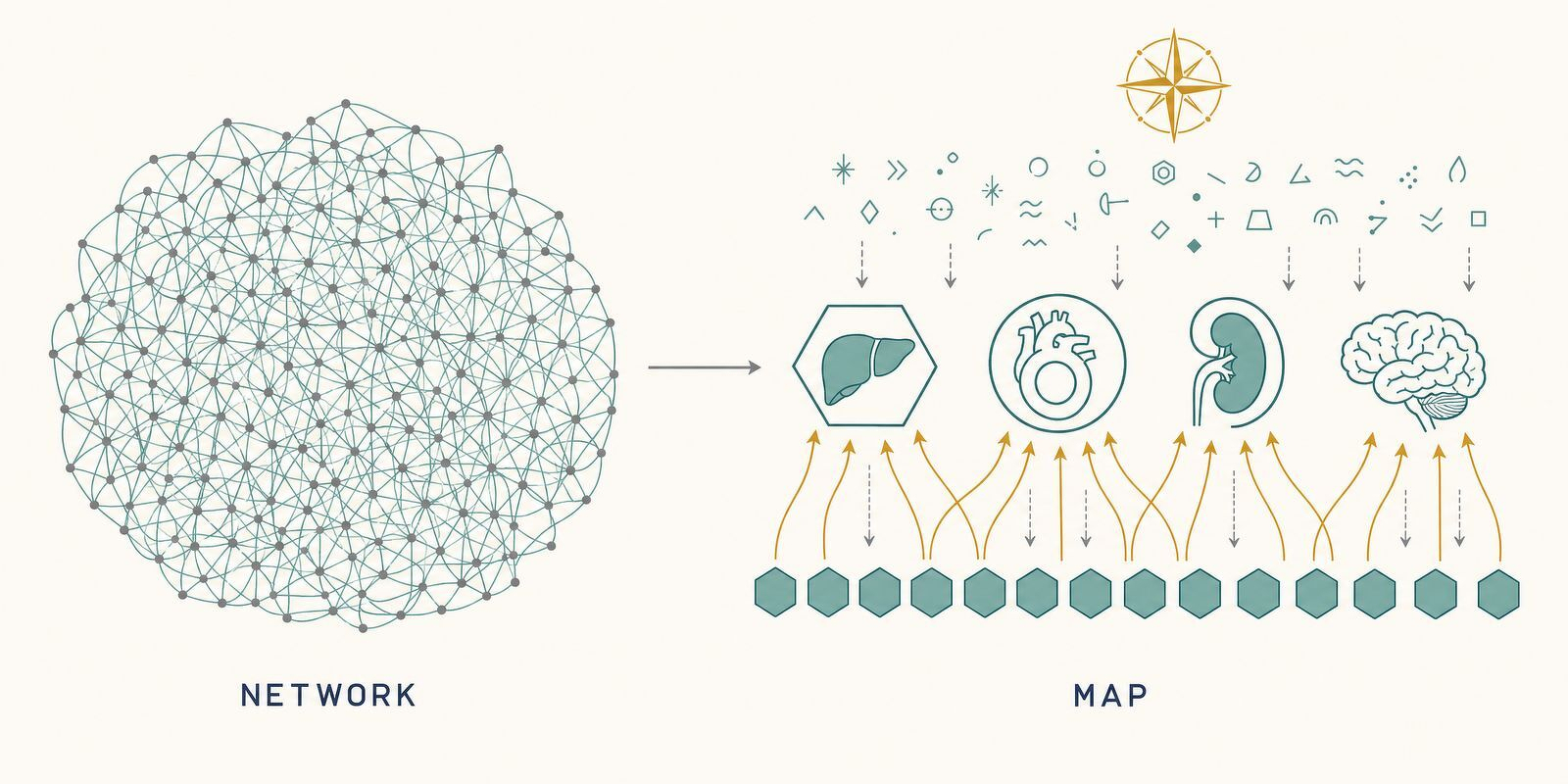
Hallmarks of aging: 9, then 12, now 14 — a list, not a map. We ask which maintenance states shape how organs age. RootMap: 22 pairs passed 4 artifact checks; 17/20 kept direction in cohort 2. doi.org/10.20944/preprints202609.2376.v1
I’m rarely on LinkedIn — email: jianghui@deepome.com
Cell names trajectories the binding constraint. Our selection-first world model: a 332-module state map x 1,916 drugs — the matrix exists, the dependency map is next. doi.org/10.20944/preprints202609.2101.v1
I’m rarely on LinkedIn — email: jianghui@deepome.com
Cell sets 4 tests: generalization, baselines, multi-step, decision value. Our selection-first world model: learn where prediction works before predicting: predictability before prediction. doi.org/10.20944/preprints202609.2101.v1
I’m rarely on LinkedIn — email: jianghui@deepome.com
Cell defines world models: state, action, transition. Our steerable world model: a model must clear five checkpoints before it can steer — miss one and it is just a predictor. doi.org/10.20944/preprints202605.0366.v1
I’m rarely on LinkedIn — email: jianghui@deepome.com
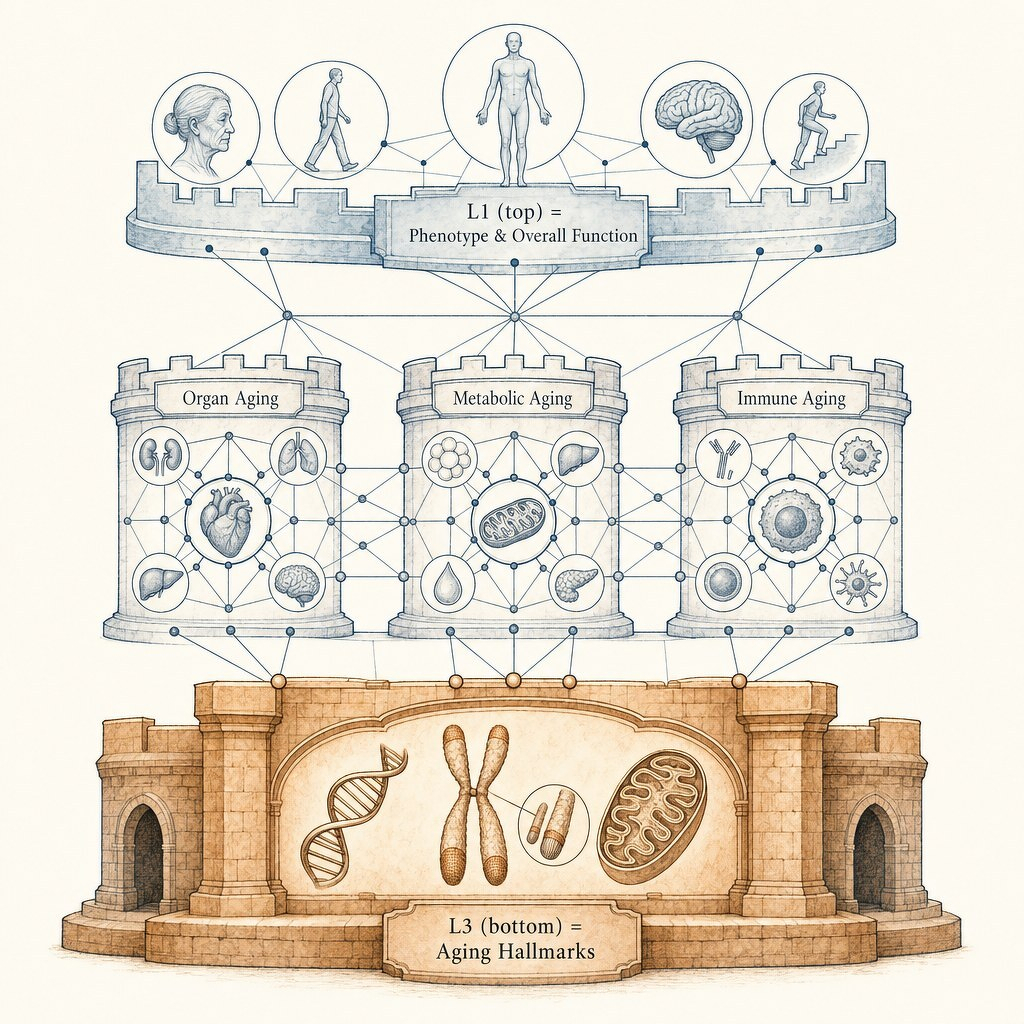
Your disease risk isn’t a number — it’s a slope. Reserves fall across five lines for years before diagnosis: phenotypic warning, organ function, metabolic stability, immune repair, hallmarks. Manage the slope, not the score.
I’m rarely on LinkedIn — email: jianghui@deepome.com
A steerable model must answer counterfactuals: what transition would this module have made without the intervention? That question separates a world model from a black box: www.preprints.org/manuscrip…
I’m rarely on LinkedIn — email: jianghui@deepome.com

Two patients, the same symptom score, different mIC states — the same intervention, different outcomes. Why N-of-1 medicine needs a state layer, not just risk scores: www.preprints.org/manuscrip… I’m rarely on LinkedIn — email: jianghui@deepome.com
